There is something beautifully awkward about walking into a room where you don't know anyone.

You arrive holding a cup of coffee, look around at unfamiliar faces, and quietly wonder where you should sit. Everyone seems slightly nervous. Some people scroll through their phones to look busy. Others exchange careful smiles while waiting for someone to start a conversation.
Then a board game is placed on the table.
Within five minutes, everything begins to change.
Someone misunderstands a rule. Someone becomes unexpectedly competitive. A quiet person makes a clever move that surprises everyone. Soon, people who were strangers only a few minutes ago are laughing, negotiating, bluffing, forming alliances, and accusing each other of cheating—in the friendliest possible way.
The nervousness slowly disappears, and everyone's inner child comes out to play.
A different kind of socialising
Meeting new people can sometimes feel like an interview.
Where are you from? What do you do? How long have you been living here?
Board games remove some of that pressure. You don't have to continuously search for the next question or worry about an awkward silence. The game gives everyone a shared purpose and lets conversations develop naturally around it.
You slowly discover people through the way they play.
There is the strategist who plans five moves ahead, the rule-breaker who argues with the instruction booklet, the dramatic bluffer who cannot hide a smile, and the person who claims not to be competitive—until they start losing.
That is when strangers begin to feel like people you have known for much longer.
A weekend away from endless scrolling
Most of us spend far too much time moving between screens.
We finish working on a laptop, check our phones, open social media for “just five minutes,” and suddenly realise that an hour has disappeared. Doomscrolling and spending the weekend bed-rotting may feel restful at first, but they do not always leave us feeling refreshed.
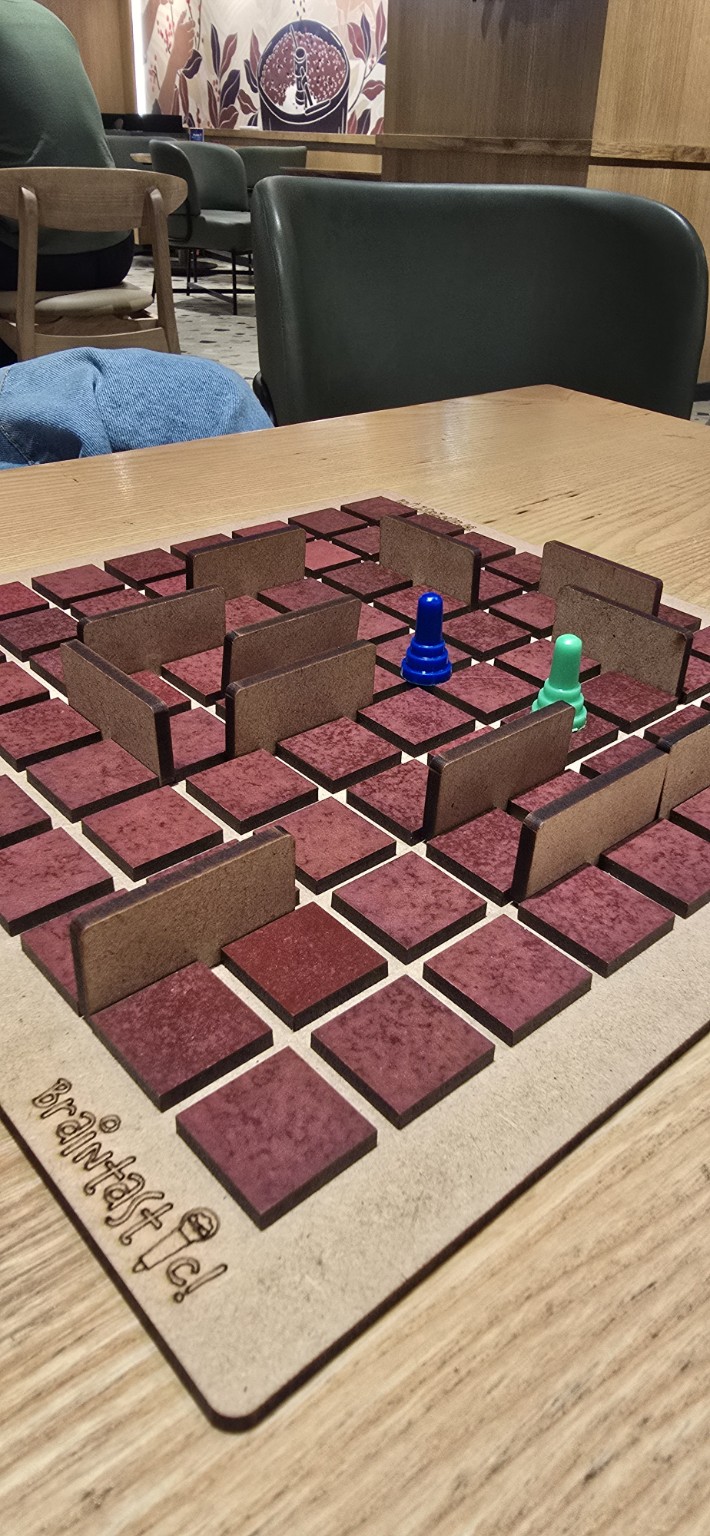
A board game demands something different: presence.
You have to observe what is happening, remember previous moves, follow changing rules, plan a strategy, and respond to other players. Depending on the game, you may be practising attention, working memory, decision-making, problem-solving, or cognitive flexibility.
Research into board games has found promising connections with cognitive engagement and social well-being, although the evidence varies by game, age group, and study design. Reviews suggest that board games can provide cognitive stimulation while also encouraging communication and group participation. The benefits are not only about “training the brain.” They also come from concentrating on one shared activity and interacting with the people sitting in front of you rather than another screen.
For me, that is the real difference.
You are not passively consuming content chosen by an algorithm. You are actively thinking, reacting, laughing, and creating a memory with other people.
How a community begins
The most beautiful part is watching a small community form around the table.
At the beginning, everyone introduces themselves politely. By the end, people are exchanging phone numbers, planning another game night, teasing each other about what happened during the game, and discussing what they should play next time.
It reminds you that friendships do not always need a perfect introduction or a deep conversation. Sometimes they begin with coffee, a few game pieces, and someone asking:
“Whose turn is it?”
A special shout-out to Let's Getaway ↗ for creating spaces where people can show up alone and still feel included. Their board-game gatherings bring together people who may never have otherwise crossed paths and give them an easy, playful way to connect. Their events are built around games, icebreakers, and meeting like-minded people—turning unfamiliar faces into a community, one table at a time.
If you are new to the city
Moving to a new city can be exciting, but it can also feel lonely.
You may want to meet people, yet not know where to begin. Loud parties may not be your thing, and approaching strangers without any shared context can feel uncomfortable.
A board-game gathering is one of the easiest activities I would recommend.
You do not need to arrive with friends. You do not need to be an expert player. You do not even need to be naturally outgoing. You only need to show up, choose a game, and give the table five minutes.
Someone will explain the rules.
Someone will make everyone laugh.
And somewhere between the first move and the last sip of coffee, the room may stop feeling unfamiliar.
Sometimes, building a community really can begin with something as simple as playing a game together.
Notes on community, curiosity and finding small ways to feel more connected.